
Start with a checkable finish
Choose day T for a small demonstration, then state what someone must be able to see. “A linkage moves through two marked positions” is a finish that can be checked. “Finish robotics” will expand to occupy every available evening.
The project can be the separate four-bar proposal or another organizer-approved mechanism. The sequence below is a planning example. It records no season, booking or completed build.
Work backward with exit checks
- T − 6 weeks: choose one visible task, constraints and a measurement. Exit: labelled sketch and question.
- T − 4 weeks: compare two choices. Exit: raw comparison or a dated fault record with an owner.
- T − 3 weeks: choose a version and document assembly. Exit: a second person can explain the parts and joints.
- T − 2 weeks: run the whole demonstration. Exit: complete operation under intended conditions, including reset.
- T − 1 week: freeze optional additions; practise operation and repair. Exit: another operator repeats the task from the record.
- T − 1 day: count parts, tools and documents; confirm access and transport with the organizer.
- T: follow the organizer’s rules; record what happened and review afterward.
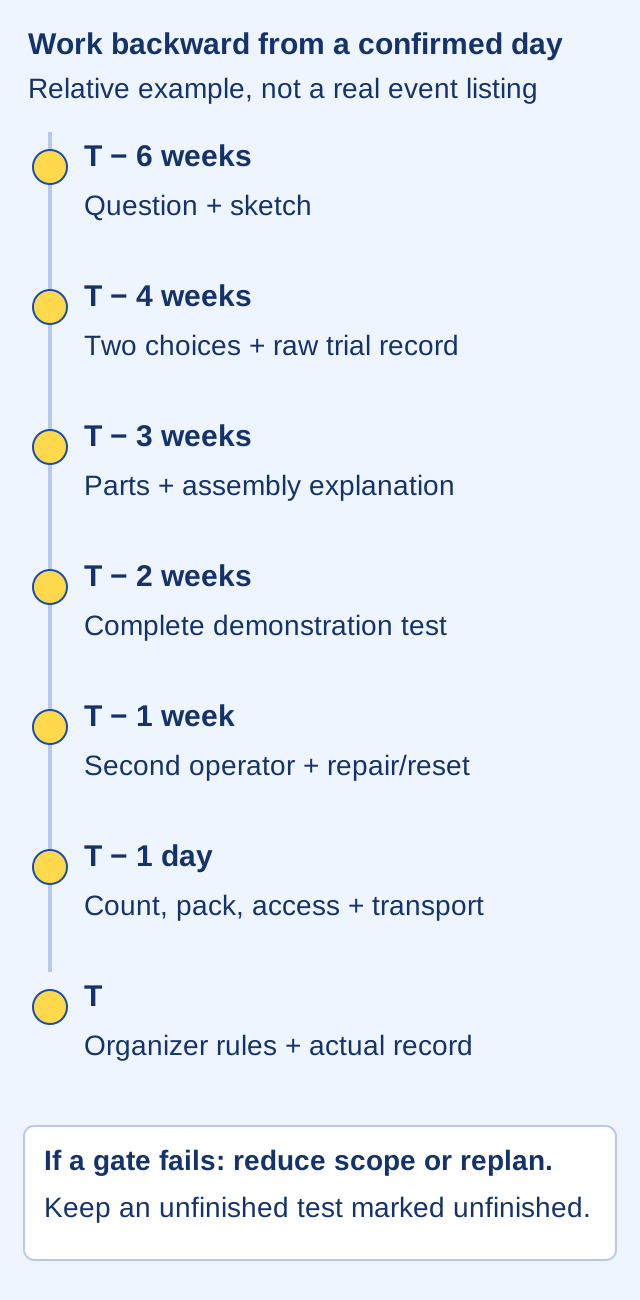
A failed gate changes the plan
If the complete demonstration still jams at T − 2 weeks, assign time to the fault before adding decoration or another feature. Options are concrete: repair the present mechanism, reduce the movement shown, or move the demonstration date with the organizer. Record which option was chosen and why.
The exit check is evidence for the next dependency. An unrepeatable mechanism cannot honestly supply “ready for a second operator”; moving its date on a calendar does not repair the joint.
One 60-minute session, one usable handoff
- 0–5 minutes
- Read the last state, choose today’s question and assign roles.
- 5–15
- Check setup and stop conditions. If the setup fails, use the remaining build/test time to diagnose it.
- 15–40
- Work on the named comparison or repair. Keep raw notes beside the version identity.
- 40–50
- Ask a second person to read the record and identify the result or unresolved fault.
- 50–60
- Reset, count parts and write a specific next action.
The 45-minute lever outline assumes pre-cut parts and includes assembly, six trials and clean-up. This 60-minute agenda reserves more time for review and handoff. Both are planning estimates, not durations validated with participants.
Put real events beside their organizer
Use FIRST’s team and event search as a starting point for current competition information. Confirm dates, access and entry with the event organizer. A competition listing does not grant access to a private workshop.